
South Yorkshire Charities Break Through Barriers to Employment Faced by Young People in Supported Housing
YWCA Yorkshire and Sheffield Foyer worked with an undergraduate researcher from the University of Sheffield to explore barriers to employment for young people in supported housing.
The project, known as Future Forward, was a nine month pilot that directly supported 24 people aged 16-25 out of financial hardship and into the workplace, breaking through barriers to employment by removing the risk of losing housing benefits and wrap around support.
The scheme, which launched in July 2025 and concluded in March 2026, specifically supported young people living in YWCA Yorkshire’s Peile House and The Guinness Partnership’s Sheffield Foyer. Grant funding was awarded by Opportunity Sheffield and the Homewards Fund.
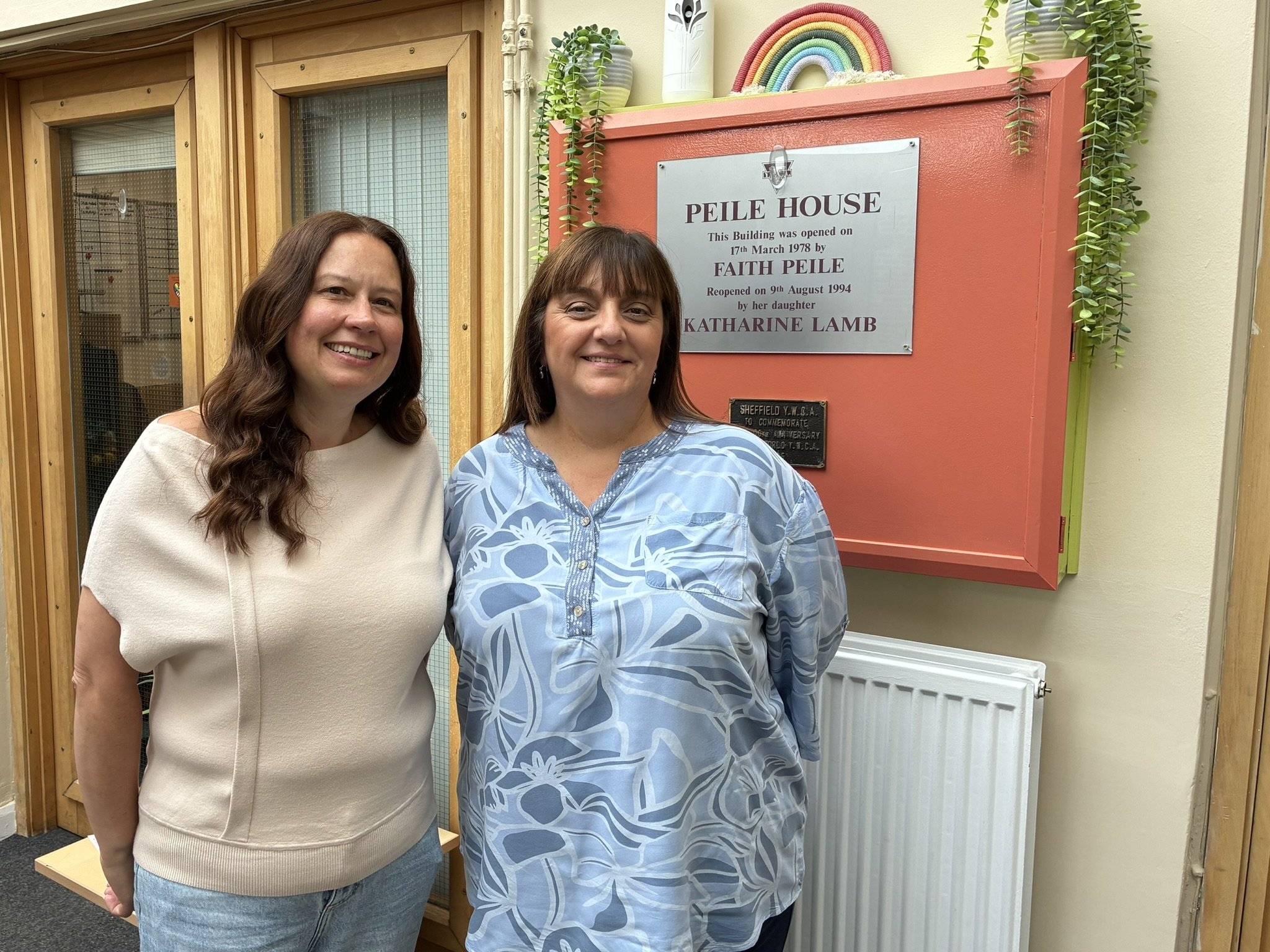
YWCA Yorkshire Manager, Claire Harding and Sheffield Foyer Manager, Samantha Mobbs
Claire Harding, Project Manager of Peile House, led on the research project that was inspired by Centrepoint’s work examining the fiscal impact of youth homelessness and Housing Benefit reform. The research, which was supported by the University of Sheffield student, Eleanor Moody, quickly revealed how closely employment outcomes are linked to the way financial support operates within supported housing.
The research confirmed what most frontline services already understand - young people are not failing to engage with work. Instead, they are navigating systems that can make progression into employment financially risky.
A central barrier is the interaction between earnings, Housing Benefit and the higher costs associated with supported housing. Young people moving towards independence often require support that, for whatever reason, was not available to them earlier in life. For those already experiencing homelessness and multiple disadvantages, entering work can lead to changes in benefit entitlement that leave them worse off overall.
To address this, grant funding was used to temporarily subsidise the support-related portion of rent. This made employment financially viable while ensuring continued access to vital support services, effectively levelling the playing field with other young people.
These pressures formed the backdrop to the research, which identified a set of consistent and interconnected barriers; digital exclusion, complex workplace processes, mental health challenges, housing insecurity, and the constant tension between work and maintaining financial stability.
Many standard employment processes assume a ‘basic’ level of stability that these young people do not have. Payslips accessed via online portals, contracts sent by email, and app-based shift scheduling all require confidence and consistency many young people have never had the opportunity to develop. Without someone to sit alongside them, these small issues can quickly escalate into significant barriers.
The research highlighted how Housing Benefit rules can create unintended disincentives for employment within supported housing settings. While supported housing provides essential accommodation and support, the transition into work can result in reductions to financial assistance that do not reflect the realities of supported housing costs. For most young people, calculations showed that taking on employment could leave them financially disadvantaged despite earning a wage.
Mental health and confidence were also key themes. Traditional employment support models can unintentionally increase anxiety, particularly when delivered through formal, time-limited appointments with unfamiliar professionals. What is often described as “non-engagement” is, in many cases, a form of self-protection.
In response, Future Forward tested a different approach by embedding employment and financial support directly within supported housing. On-site job fairs were delivered to connect young people with employers in familiar, low-pressure environments.
The results demonstrated that the key difference was not structural complexity, but trust. Young people engaged when support was consistent and relational, when staff helped them check emails, understand contracts, prepare for interviews and remained alongside them after the first shift.
Where employment was sustained, young people reported improved mental health, increased confidence, greater routine and a stronger sense of self-worth. Some were able to support themselves for the first time.
Importantly, the research also demonstrated measurable improvement following participation in Future Forward, with statistical analysis indicating that the positive changes observed were reliable at the 95% confidence level.
While barriers remain - particularly around digital systems, mental health, housing insecurity, and benefit interactions - outcomes improved where support was practical, relational, and sustained.
The findings reinforce a critical insight often overlooked in policy discussions: sustaining employment is not just about getting a job. For many young people, the greatest challenges come before that stage - building confidence, overcoming instability, and believing that work will meaningfully improve their lives.
Supported housing plays a critical role, not only as accommodation, but as the place where trust, consistency and practical support make employment possible at all.
Claire Harding, YWCA Yorkshire Project Manager, said: “Future Forward addresses the financial barriers that prevent supported housing residents from entering work due to unaffordable costs when housing benefits cease. This is particularly stark in the supported housing sector, where the wrap-around cost for people escaping homelessness, abusive relationships and recovering from trauma, increase the overall rental charge significantly.
“Employment should create a pathway out of homelessness, yet too often young people find themselves facing a choice between maintaining the support they need and taking up work.
“For a young person with high support needs, this targeted intervention can revolutionise their living situation, health, wellbeing and earning potential. Opening opportunities to grow income, skills and career prospects. Future Forward has produced data to evidence the social and economic benefits that come when people are empowered out of unemployment and into a brighter future.”
Samantha Mobbs, Sheffield Foyer Manager from The Guinness Partnership said: " For young people moving out of supported housing and into their own long-term accommodation, it’s essential that they get the personal and practical support they need while working if they are going to thrive.
“The Future Forward scheme allowed us to offer a rent reduction programme for young people, who found work, and a move-out grant of £1k.
“Our joint target with YWCA Yorkshire was to get 16 young people into work and off benefits in a 12-month period. We managed to help 24 young people into work within 9 months. This was a fantastic outcome and shows that the issue isn’t with a lack of motivation or ambition on the part of the young people, they just need the barriers removing. They are then allowed to be economical active members of the community saving thousands on the public purse and allowing them to thrive and not just survive.”
Too often, debates about young people and benefits focus on dependency. Yet the Future Forward research suggests something far simpler - when support is in place, young people engage with work, and they sustain it.
The challenge is whether our employment, welfare and housing systems are willing to change with them. Because helping young people into work is only part of the solution. Without Housing Benefit arrangements that recognise the realities of supported housing, employment alone cannot provide the stability and independence that policymakers expect it to deliver.
If you would like to learn more about Future Forward, please contact: claire.harding@ywcayorkshire.org.uk